
Where can stability be found if the anchor comes loose? Dollar turbulence and the euro’s international role
According to the Member of the Board Tuomas Välimäki, Europe now has a unique opportunity to strengthen its own position in the financial markets. The EU must develop a strategy which would allow the creation of additional, genuinely common, safe investment assets and would improve the debt sustainability of Member States. This would strengthen the euro’s role as an international currency, said Välimäki at the Bank of Finland's stakeholder event on 14 August 2025.
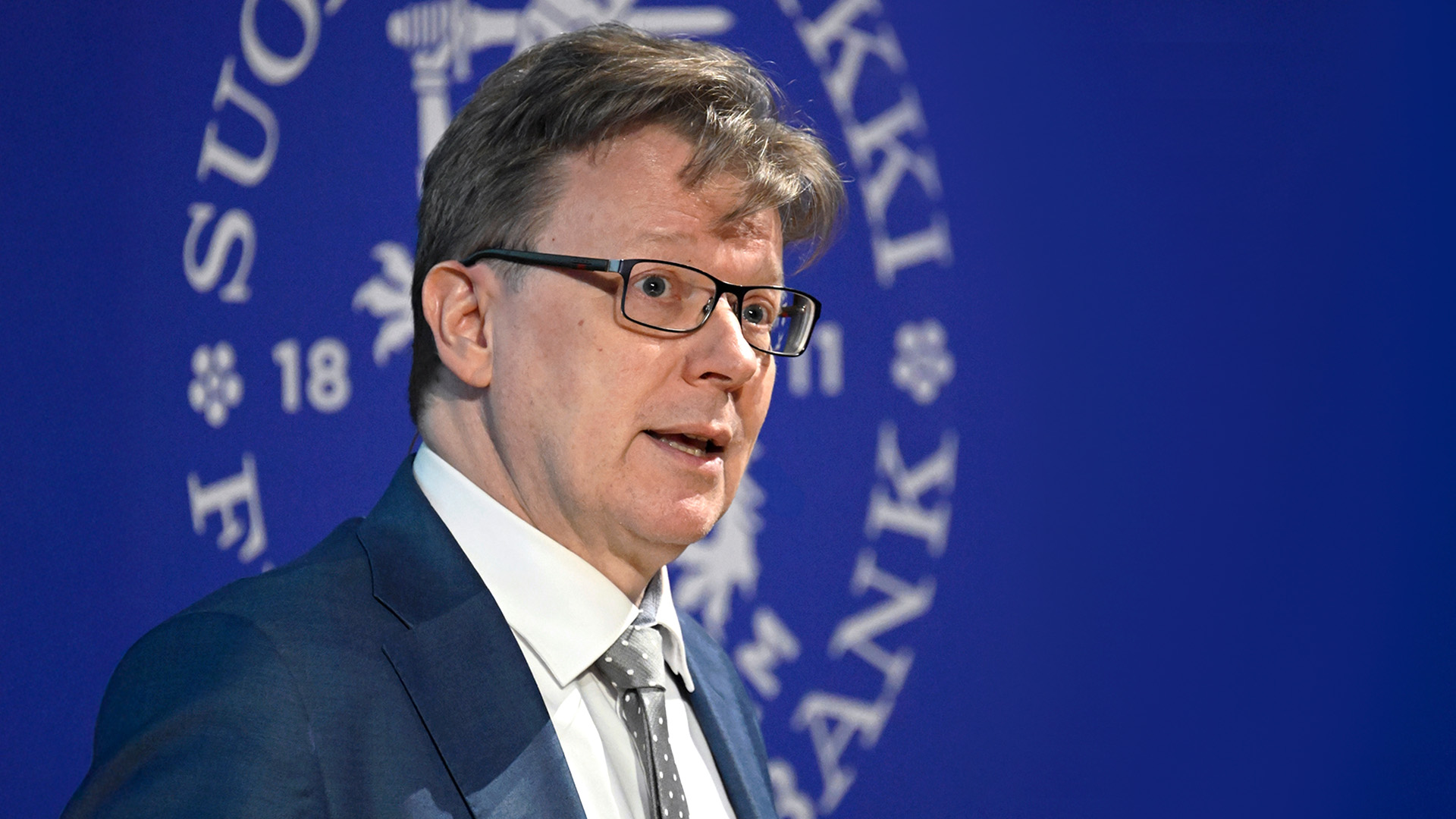
Bank of Finland's stakeholder event on 14 August 2025
Presentation (pdf)
Translation of the draft script.
Where can stability be found if the anchor comes loose? Dollar turbulence and the euro’s international role
First, may I also wish you a very warm welcome to this Bank of Finland stakeholder event. Governor Rehn’s depiction of monetary policy in these times of uncertainty leads us nicely to the theme of my talk, which is the possible, though unlikely, prospect of a change occurring in the status of the global economy’s anchor.
One consequence of the recent actions of the United States administration is that the dollar’s standing as a safe haven and reserve currency has been the focus of more critical scrutiny. From the Eurosystem’s perspective it is essential to look at how the euro’s role in global financial markets can be developed in the present environment.
I shall briefly examine the factors behind the dollar’s turbulence seen in the first part of the year and the opportunities to strengthen the role of the euro and European investment assets. I must emphasise at this point that I am not in any way calling for the euro’s role to be strengthened at the expense of the fundamentals of the global economy.
The task of central banks is, above all, to stabilise the value of money and purchasing power. Trust in the monetary economy is both a premise for stability and a consequence of it. Wishing for or fostering change could be a risky undertaking, given this context. With the forces of change pushing on independently of us, our task is to analyse developments closely and to seek to strengthen the euro’s position and its stability.
The US dollar is still by far the most important reserve currency, even though its share of global currency reserves has fallen from over 70% to less than 60% since the creation of the euro. At the end of 2024, the euro’s share was about 20%. This is slightly higher than in the early years of the euro, but is lower than it was about 15 years ago, when its share was nearly one quarter.[1] The euro is still clearly the world’s second most important reserve currency, even after the European sovereign debt crisis and the extended period of negative interest rates.
The euro is also second only to the dollar in other metrics too, such as in international debt, loans, deposits and foreign exchange turnover.
However, the euro’s role in the global economy should not be taken for granted. Nor should its current position be seen as optimal. The circumstances for strengthening the euro’s role are now remarkably good – unfortunately, perhaps. For this to happen, however, there needs to be deeper economic integration in Europe. I shall return to this point.
There have been extraordinary signs this year that the dollar’s dominance is being shaken. Underlying this has been the US economic policies.
This was perhaps most clearly highlighted in April, when the tariff announcements and questioning of the central bank’s independence gave rise to a widespread reaction in the markets. The unpredictability of US policy is continuing, and there is still no end to the twists and turns – despite the many trade agreements that have been provisionally reached.
Besides trade policy, there has also been turbulence in the geopolitical environment. The United States has altered its stance towards its allies to such an extent that some countries, at least, might in the future be less willing than today to invest in the US.
At the same time, the US has introduced various economic policy reforms which, according to economists, will add further to the already large budget deficit. Although high debt levels are a problem in many economies, investors have started to question how sustainable the debt trajectory is in the United States, especially in a situation where the credit rating has weakened and there are repeated budget disputes in Congress.
There are also smaller and more technical considerations that do little to enhance the confidence of those investing in US debt securities – such as the country’s loss of its AAA credit rating and the regular demands by Congress to raise the debt ceiling.
At the same time, there are indications that institutions regarded as stable are being undermined. Besides challenging the independence of the central bank, there have also been quarrels with the judicial system, and key economic statistics are starting to be politicised.
These actions have had an exceptional impact on the dollar. The exchange rate no longer follows yield spreads in the way we have been used to. The dollar has depreciated, even though US interest rates have risen in relation to the euro area.
The reaction of financial markets has not been limited to the weakening of the dollar. Following the turbulence of the tariff announcements, many of the established correlations in the financial markets were ‘broken’ for a short while. During the worst of the turbulence the dollar, US stocks and (long-term) Treasury bonds lost value. US government bonds also fell in value against swap rates, and the cost of hedging against dollar depreciation rose on the options market. This is exceptional, as the dollar and US government bonds have long been regarded among international investors as safe havens from crises and they have invested in these partly for this reason.
It was good news that amid the tariff upheavals there was some safe haven demand for euro area assets, and the markets functioned almost without difficulty.
Uncertainty over US assets has subsequently faded somewhat, but has not disappeared. The dollar is still considerably weaker than at the start of the year, and the unpredictability of US policy is, generally speaking, keeping investors on their toes.
For foreign investors, the dollar’s negative correlation with share prices has traditionally provided a safeguard, and so the foreign exchange risk has often not been fully hedged. But now, investors have, with reason, been questioning whether this can be relied upon as before. There is evidence that, since April, international investors have been hedging their dollar positions more than previously. This has accelerated the weakening of the dollar, although it is not the only reason for this. The prices of currency options have also now been restored a little.
The demand for euro area debt securities has been strong. Foreign central banks have been active in buying euro government bonds, and the demand for corporate bonds has also been strong. Market participants are reporting that investors have been looking for alternatives to the dollar. This view is also supported by statistical data on the investment streams of funds and US debt securities. Nevertheless, on the basis of activity in the equity markets, it seems that tax reductions and the passion for technology have restored the optimism of investors towards the dynamic corporate landscape of the United States.
My own interpretation of these market indicators is that there are early signs that investor interest is shifting from the dollar to the euro and other currencies. So far, however, the evidence to support this is rather thin and does not yet reveal any fundamental shift. It remains to be seen whether the swings earlier in the year were just a shift in the tactical positioning of investors or whether investors are altering their investment strategies more permanently. From the viewpoint of orderly market functioning, the hope in any case is that capital movements will occur in a controlled manner in the longer run.
Based on market fluctuations, the way in which investors view the United States as an investment destination seems to have changed, at least to an extent. But what do investors themselves say?
Two surveys have recently been carried out that allow us to try to determine what major investors are thinking. The ECB’s Institutional Investor Dialogue includes some of the largest asset management companies, while the OMFIF’s Global Public Investor survey includes central banks and other important investors in public assets.
You can infer from the surveys, first of all, that investors do intend to structurally alter the allocation of investments away from the dollar, in part towards Europe. Many have already reduced their tactical US allocations.
Secondly, trade policy and geopolitics, as well as the situation more generally in the United States, are a cause of widespread concern, and this does have an impact on investment decisions.
And thirdly, investors do not believe that the dollar’s reserve currency status will crumble, and the expectation is that changes will occur slowly. The position of the dollar is nevertheless of such importance that even a small-scale shift of international investors from the dollar to the euro would bring a considerable amount of additional investment to Europe.
The surveys therefore verify the signals given by market indicators. Although no significant shift has occurred so far, the actions of the United States have caused investors to ponder alternatives to the dollar. I must add here that I shall be very interested to hear about how you view the situation.
Europe and the euro now have an opportunity to benefit from investor interest. The role of euro area sovereign bonds as a global safe haven appears to have strengthened in recent months. But what can we do better in order to attract more investors to Europe?
We have really quite a considerable opportunity now if we make the right choices and work together towards a common goal.
Let’s consider for a moment what features are actually required of a global reserve currency. To begin with, the economy in question must normally be large and growing, with debt at a sustainable level. Stable and strong institutions are also clear advantages for the euro. We must maintain and strengthen these basic pillars in Europe in the future, too. Europe’s position will also be underpinned in the coming years by bolstering its capacity to defend itself. These already feature broadly on the agenda of Europe’s politicians.
Deeper, more liquid and more unified capital markets would also support the international use of the euro. The wide-ranging promotion of a savings and investments union is at the heart of this, and we at the Bank of Finland, and in the Eurosystem, are seeking to play our part in these developments.
In the current geopolitical environment, the role of a digital euro as a new European means of payment has become more significant. A more effective payment system, for instance regarding wholesale and cross-border payments, would in other respects, too, improve the effectiveness of European financial markets and boost the euro’s attractiveness.[2] We will also see to the euro’s availability in all circumstances, even outside the euro area, through the ECB’s liquidity facilities. This, too, will foster the euro’s international role.
I would nevertheless like to concentrate today on the sufficiency of safe investment assets. We are still lacking a common and safe European investment asset. As we know, the discussion about financing Europe’s defence is especially topical. Could we also at the same time strengthen the euro’s ability to function as a global reserve currency? Or to put it another way, could we kill two birds with one stone?
First let’s consider what we mean by a safe investment asset. [3]
A safe investment asset is an asset for which there is the greatest confidence that its value will be preserved in all circumstances. Such assets are highly creditworthy in that the probability of the issuer defaulting is extremely low. They are also very liquid, making them easy to sell in almost all circumstances. Safe investment assets therefore tend to retain their value or even gain in value in times of crisis in the markets.
Safe investment assets bolster risk assessment in financial markets, as other securities and their risk level are priced in relation to these safe assets. This improves market transparency and reduces financing costs.
Safe investment assets are also used as collateral and as underlying security in many market segments that are important for the functioning of the financial markets, especially in the repo market, in derivatives and in central bank refinancing operations. Without a sufficient amount of high-quality collateral, key financing channels can freeze up. This is what we saw in the global financial crisis that began in 2008.
US government bonds have long met the conditions for being safe investment assets. They have formed an anchor for global markets – a foundation for pricing international finance, and a safe haven for investors to move to when the pricing uncertainties related to other investment assets exceed a certain tolerance level.
The existence of safe investment assets is therefore essential to the functioning of the markets. The United States benefits in various ways from being an issuer of safe investment assets.
As US government bonds are considered a safe investment, there is extensive demand for them globally. This reduces the country’s financing costs. The US enjoys this so-called ‘convenience yield’, a premium which investors are willing to pay for the benefit of holding US bonds. Envious onlookers might instead call this, in the words of Giscard d’Estaing, an ‘exorbitant privilege’.
Extensive international demand also means that there is unending additional capital for financing investments in the United States. What’s more, the US can also rely on an inflow of capital in crisis situations. Looking at the euro area, it would be advantageous if its monetary policy were to be transmitted more evenly across the euro countries in crisis situations too – instead of yield spreads widening between countries, as tends to happen nowadays.
Can the euro’s international role be fostered by increasing the amount of safe investment assets in the euro area?
As I noted earlier, the euro and the European sovereign bond markets would appear to meet the basic requirements for becoming international safe investment assets.
However, although our sovereign bond market is large – in excess of EUR 10 trillion – it is only about one third the size of its US counterpart. The position of the debt securities market in the euro countries is further weakened by it being fragmented on the basis of the various issuers.
As a consequence, we actually have a lot fewer safe, highly creditworthy investment assets. The closest to a safe investment asset that we have in the euro area is the German 10-year Bund, but the volume of these is small from the perspective of the global financial markets.
Regarding the completion of Europe’s capital markets union, it is important that we have a sufficient supply of euro-denominated safe investment assets for the purpose of financing the growing investment needs and for bolstering the euro’s international position.
Within the current framework, more safe investment assets for Europe could be found in the medium term by improving the credit ratings of the EU’s Member States. An improvement in member countries’ debt sustainability would also be desirable from this perspective.
If Europe was able to offer a genuinely safe and liquid investment asset equivalent to US government bonds, it would provide investors with a credit-risk free, liquid, homogeneous alternative as a foundation for their investment portfolios. This would also advance the wider use of the euro. In the surveys I mentioned earlier, investors specifically identified the absence of a safe investment asset as being the biggest obstacle to expanding the euro’s reserve currency role, although they also pointed to the temporary nature of common debt (EU bonds), and the inadequate liquidity of the government bond markets.
The creation of investment assets is not, of course, a sufficient justification in itself for accumulating public debt, but there is currently a justified need in Europe for debt financing both nationally and on a common basis, because capital is needed for the necessary strengthening of Europe’s common defences.
Europe already has a significant amount of common European debt [left-hand graph]. But even these debt securities do not behave like safe investment assets.
What, then, do we need to do to ensure any future common European debt is to be more like a safe investment asset?
A clue can be gained by looking at a comparison of the debt securities of particular institutions. The interest rate on ESM debt is the lowest among EU institutions [right-hand graph]. The ESM is well capitalised. This emphasises the need for common revenue streams in order that common debt can really be a safe investment asset.
A safe asset requires not only a clear and credible guarantee structure but also certain more technical properties, such as the inclusion of active futures trading in the most important bond indices, permanent and homogeneous issuances and active collateral usage in the repo market.
Nevertheless, current institutional structures do not allow the creation in the euro area of an instrument with an adequate guarantee structure. An investment asset that is genuinely like the US government bonds would require either a common tax base, a federal budget or other institutional division of responsibilities within which you could issue homogeneous and credit-risk free debt securities.
The creation of genuinely safe investment assets would therefore require significant changes to European institutions. I do nevertheless believe that a well-designed common European safe asset – whether in the form of eurobonds, common debt securities or some other structure – could constitute a safe investment asset and its benefits could be distributed more widely among Member States. The euro countries’ ‘convenience yield’ should not concern only German bonds. Public debate on the different alternatives is already under way. Covering borrowing with common revenue streams is critically important, however.
But I would also emphasise at the same time that alongside the creation of a common safe investment asset, it is also important to strengthen national safe investment assets.
To finish with, I shall run through a few concluding remarks. The role of the euro in international financial markets is robust, but it should not be taken for granted. The latest actions by the United States have raised questions among investors about the role of the dollar, and Europe now has a unique opportunity to strengthen its own position. This is not an end in itself, but, rather, a stronger international role for the euro would support growth in the euro area economy and the strategic autonomy of the euro area in a changing world.
This requires us to work in a determined manner to foster economic growth, ensure debt sustainability, maintain stable institutions and deepen the capital markets.
There should be a focus on increasing the amount of safe investment assets, particularly now when there are discussions in connection with the financing of defence spending. A safe investment asset is not merely a technical financial detail – it is an essential element of a capital market that finances investments. With common input at EU level, it should be possible to improve the efficiency of budgeting and borrowing.
As always, major reforms are challenging and take time, but nothing can be completed if it’s never been started. To paraphrase President Kennedy: We choose to do things not because they are easy, but because they are hard.
If we are to succeed, the EU must develop a strategy which would allow the creation of additional, genuinely common, safe investment assets and would improve the debt sustainability of Member States. This would foster economic growth and the stability of the financial markets, and would also deepen the capital markets union and strengthen the euro’s role as an international currency.
Thank you for your kind attention. With that said, I now look forward to hearing you views on the development of the market and on ways to strengthen the role of the euro.
[1] The euro's international role is examined in more detail in the ECB's annually produced report ‘The international role of the euro’, which was published in June this year.
[2] I have spoken about the importance of a digital euro and payment modernisation in various other contexts, such as in a speech entitled ‘A digital euro could be a cornerstone for payments’ (in Finnish), on 15 May 2025, and another entitled ‘Finnish payment and settlement systems should be developed for a future common European market’ (in Finnish), on 10 March 2025.
[3]I have discussed this earlier in a blog post: https://www.eurojatalous.fi/fi/blogit/2025/turvallinen-sijoituskohde-on-paaomamarkkinoiden-ankkuri/, (in Finnish) on 30 April 2025.