
Geopolitical uncertainty and the future of payments
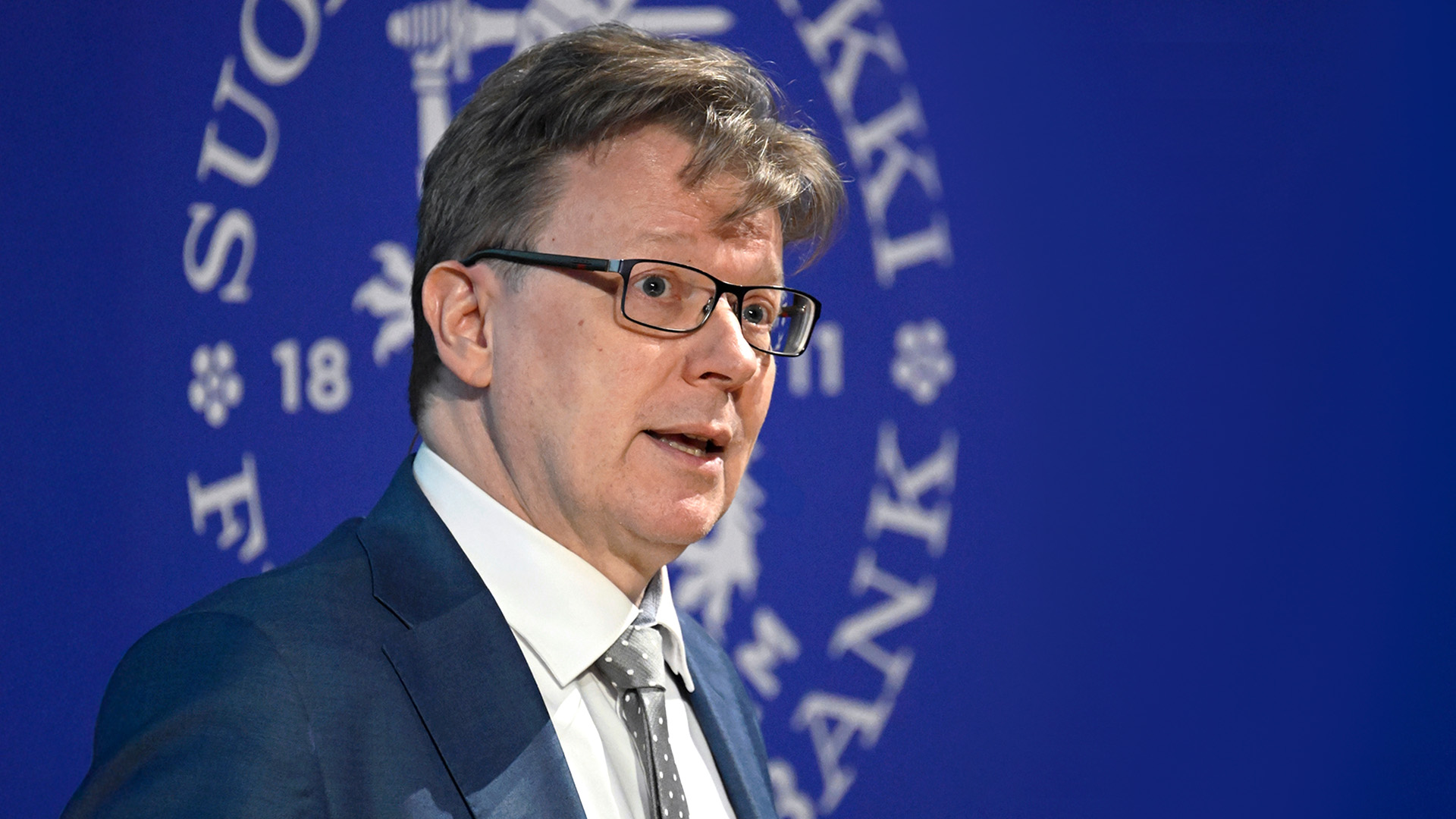
Over the past decades, the development of payments has been a success story of efficiency and digitalisation. In a geopolitically uncertain world, however, this is no longer enough. In payments, too, we need resilience, alternatives, and sufficient autonomy, said Member of the Board Tuomas Välimäki in his opening speech at the Bank of Finland's Payments Forum, Maksufoorumi, on 27 May 2026.
Human-edited AI-generated translation of a speech originally delivered in Finnish.
Dear Distinguished Guests, Colleagues and Friends,
A very warm welcome to the Payments Forum!
I must begin by saying that we live in a time when payments, too, must be viewed in a new light. That is also what today is about.
For almost 20 years, the Payments Forum has brought us together to discuss the transformation of payments and the payments landscape. Over the years, we have talked about regulation, the digitalisation of payments, the mobility of payments and the move towards real-time payments. Perspectives and priorities have changed, but so has the broader setting. What previously may have appeared as fragmentation can today be seen as resilience. Efficiency alone is no longer enough. In payments, too, we need resilience, autonomy and, above all, alternatives.
From efficiency to operational resilience
No function that is critical to society should become a private monopoly. This is why payments may need to be regulated or supported by public solutions. The revised Payment Services Directive (PSD2), for example, opened up new opportunities for service providers and increased the range of payment options available to consumers and businesses. In this way, the payments landscape became more international, particularly in e-commerce. For a long time, this development was seen almost exclusively as positive.
In Finland, everyday payments have been strongly international for around 15 years. Domestic bank cards were phased out at the same time as the use of cash was rapidly declining. At the time, the shift to international, non-European payment cards seemed entirely rational. Why maintain an expensive domestic system if an efficient and reliable alternative already exists? The idea that technology might be used as an instrument of politics felt remote.
We now live in an era marked by a new kind of uncertainty. The geopolitical environment is shaping decisions and structures in a fundamentally new way. This is also visible in payments and payment systems. And this is not a minor shift.
Concentration also creates vulnerabilities
Over the past two decades, the development of payments has been a remarkable success story. Digitalisation has made payments faster and easier. Card payments have established themselves as the most important payment method for Finns. Smartphones have brought mobile payments within the reach of different consumer groups. Payment has become so convenient that it is almost an invisible part of everyday life. For better and for worse.
At the same time, another change has taken place. Payments have become highly concentrated. What yesterday was efficiency can today be a vulnerability. Payments, which have a major impact on society’s ability to function, rely on a limited number of systems, technologies and global providers. Under normal conditions, this is efficient. Just as we wanted it to be. But what do normal conditions mean anymore? Only a few years ago, we talked about instant payments as the new normal. Today, the new normal is geopolitical uncertainty.
The close connection between economics and politics came into view during the first term of the current President of the United States, which was marked by trade disputes, tariffs and technological confrontation. Payment systems, too, have now become instruments of policy through sanctions. They may be used to exert influence on governments, companies and citizens. A recent example of this is the new US executive order on payments, which reflects a favourable approach towards digital assets and their integration into the traditional financial system. This development also involves risks that Europe must assess carefully.
Europe’s security environment faced a new crisis when Russia launched its war of aggression against Ukraine. The war is, first and foremost, a humanitarian tragedy for Ukrainians. At the same time, it has permanently shaken Europeans’ sense of security. Warfare on the front line has been accompanied by attacks on society’s critical infrastructure. Cyber threats, severed undersea cables and hybrid interference may not always target payment systems directly, but they spread uncertainty throughout the structures of society.
Alternatives are part of society’s ability to function
The Bank of Finland has a statutory role of ensuring the reliability of payment systems. A reliable payment system must also be operationally resilient. Alternatives in payments are no longer merely about consumer choice; they are part of society’s ability to function in all circumstances. This is important to keep in mind. The range of threats is so broad that there is no single solution. This is why, alongside increasing alternatives, we must strengthen the operational resilience of existing payment systems and build contingency arrangements.
Operational resilience in payments does not arise from a single system or a single provider. It arises from a network: banks, merchants, technology providers, authorities – and, ultimately, users’ trust. Every missing link weakens the whole.
Yesterday, the Finnish Financial Supervisory Authority noted in its thematic review of banks’ instant payment services that the rollout of these services has progressed well. The Eurosystem, and the Bank of Finland as part of it, have supported the use of account-to-account instant payments in different payment use cases, particularly at the point of sale.
Last September, the Payments Council transferred responsibility for developing the Finnish instant payment solution, Pikis, to Siirto Brand Oy. Siirto Brand will launch its first services at the beginning of next month. This is an important step for the resilience and competitiveness of Finnish retail payments. We hope to see results soon – also in in-store payments.
The value of a network emerges when a sufficient number of key actors are involved. Without merchants, there is no network. Without a network, there are no alternatives. Once critical mass is reached, I believe Finnish consumers will be willing to adopt new payment methods. Competition matters, because, with the decline in the use of cash, card infrastructure has gained a very strong position in Finnish payments.
One of the Eurosystem’s key projects for strengthening European payment autonomy is the digital euro. This would not merely be a new payment method, but also an electronic contingency arrangement for the payments infrastructure. It is about a new opportunity - and at the same time about preparedness. The digital euro would strengthen the operational resilience of payments across Europe.
The digital euro would work not only for online payments, but also at the checkout and in person-to-person transfers. The possibility of paying taxes in digital euros would give concrete meaning to their status as legal tender. It is also important that the digital euro is intended to function as a means of payment in offline situations. At the same time, the digital euro would harmonise European payment standards and support the emergence of other pan-European payment applications.
The legislative negotiations on the digital euro are still ongoing. It is worth noting at this stage that one particular thing unites those involved in the negotiations − the European Parliament, the Commission and the Council. Namely, they agree that the digital euro would significantly improve our ability to respond to payment disruptions.
Piloting of the digital euro would begin on a small scale already next autumn. I am pleased that there has been interest in the project in Finland, and that the Bank of Finland is to be one of the central banks piloting the digital euro. I believe that, by the end of this decade, the digital euro will become an essential part of our range of payment methods.
Geopolitical uncertainty has influenced the strategic direction of payments both in Finland and across Europe. The Eurosystem’s comprehensive vision for the future of payments was published in March. The strategy emphasises the role of central bank money as an anchor of trust, the resilience and autonomy of Europe’s payment systems, and competitiveness and innovation. But our attention is not only on Europe. We are also closely following the transformation of payments globally.
Through cooperation between the market and public authorities, solutions have already been developed to help the sector prepare for various exceptional circumstances. Finland’s national emergency account system is intended for the most severe crises. But exceptional circumstances come in many forms, and the duration of a crisis is also highly relevant to its impact. This is why contingency arrangements deserve continued investment. When around 90% of grocery retail payments are made by card, disruptions in card payments quickly become visible in the everyday lives of both merchants and consumers. The Bank of Finland is planning, together with other financial market authorities and in close dialogue with the industry, a card payment arrangement that would operate during network outages – in other words, in offline mode. The objective is simple: payments must work even when network connections do not.
New technologies are changing the payments ecosystem
Amid global political turbulence, payment ecosystems are continuing to evolve. The fragmentation of payments continues, and from the perspective of operational resilience this is more of a strength than a problem. Networks evolve, actors change, information and data become more plentiful and technology advances.
At the same time as new private quasi-monetary systems are being built around stablecoins, Europe is seeking to strengthen its own payment independence. We are following this development closely. At present, we see stablecoins primarily as part of the crypto-asset ecosystem, without a clear role in ordinary payments. If assets based on new technologies can be settled in central bank money, a separate bridge between the old and the new monetary system may not even be necessary. In Europe, this is what the Pontes project is aiming for.
But what will ultimately change payments the most? This morning, we will hear expert panel views on the transformation of payments in different use cases. And perhaps we will also get an answer to the question of whether the customer is ultimately right – or whether she is an asset over whose ownership others compete.
Payment fraud is a shared challenge
In addition to the geopolitical tensions, the world is full of other threats. The pandemic further accelerated the digitalisation of payments. At the same time, the speed of payments and the development of artificial intelligence have also opened doors to crime. Where there is money, there are fraudsters. This has always been the case.
The Bank of Finland Museum offers a fascinating view of the history of Finnish money, banknote art and the earliest banknote forgeries. Banknote counterfeiting still occurs, but in the context of digital payment methods the scale is entirely different. Fraud targeting individuals has continued to increase in Finland, and the figures are disturbingly high. The problem is significant for society and deeply concerning from the perspective of individual victims.
In Finland, different sectors and authorities are already doing a great deal of work to combat payment fraud, both together and separately. Cases of payment fraud prevention and recovery have also increased, which shows that this work has had an effect.
Last autumn, the Payments Council established a working group to support the ongoing work to combat payment fraud. The group’s task is to assess current needs, identify the most important areas for change and compile recommendations for cost-effective and feasible measures. In the second part of today’s Payments Forum, we will receive an overview of payment fraud in Finland and hear about the roles and measures of different actors in taking this work forward. In this, too, we are all in the same boat.
Preparedness builds trust
Even so, we must remind ourselves that not everything is as bleak as it may seem. Our current payment systems work efficiently and reliably. We have avoided serious cyberattacks and have succeeded in preventing data breaches. The industry has strengthened the operational resilience of payment systems and built services that customers can trust.
In a geopolitically uncertain world, payments cannot be built on the assumption that everything continues to work all of the time. They must be built in such a way that they will still function when other systems do not. A single disruption must not be allowed to stop payments as a whole.
This is why the issue is not only one of efficiency. It is also one of preparedness. Preparedness means alternatives and diversity. It is a necessity of our time. Alternatives are not inefficiency. They are a form of insurance. And they create stability and resilience.
The future of payments will be strong when payments are efficient in normal times, resilient during disruptions and sufficiently independent in all circumstances.
Trust in money is built on the fact that payments work. Trust in society is built on the fact that payments work even when some things do not go according to plan. This, distinguished guests, colleagues and friends, is what the future of payments is about.
Welcome to this year’s Payments Forum.