
Economic Security and Strategic Resilience in Finland and in Europe
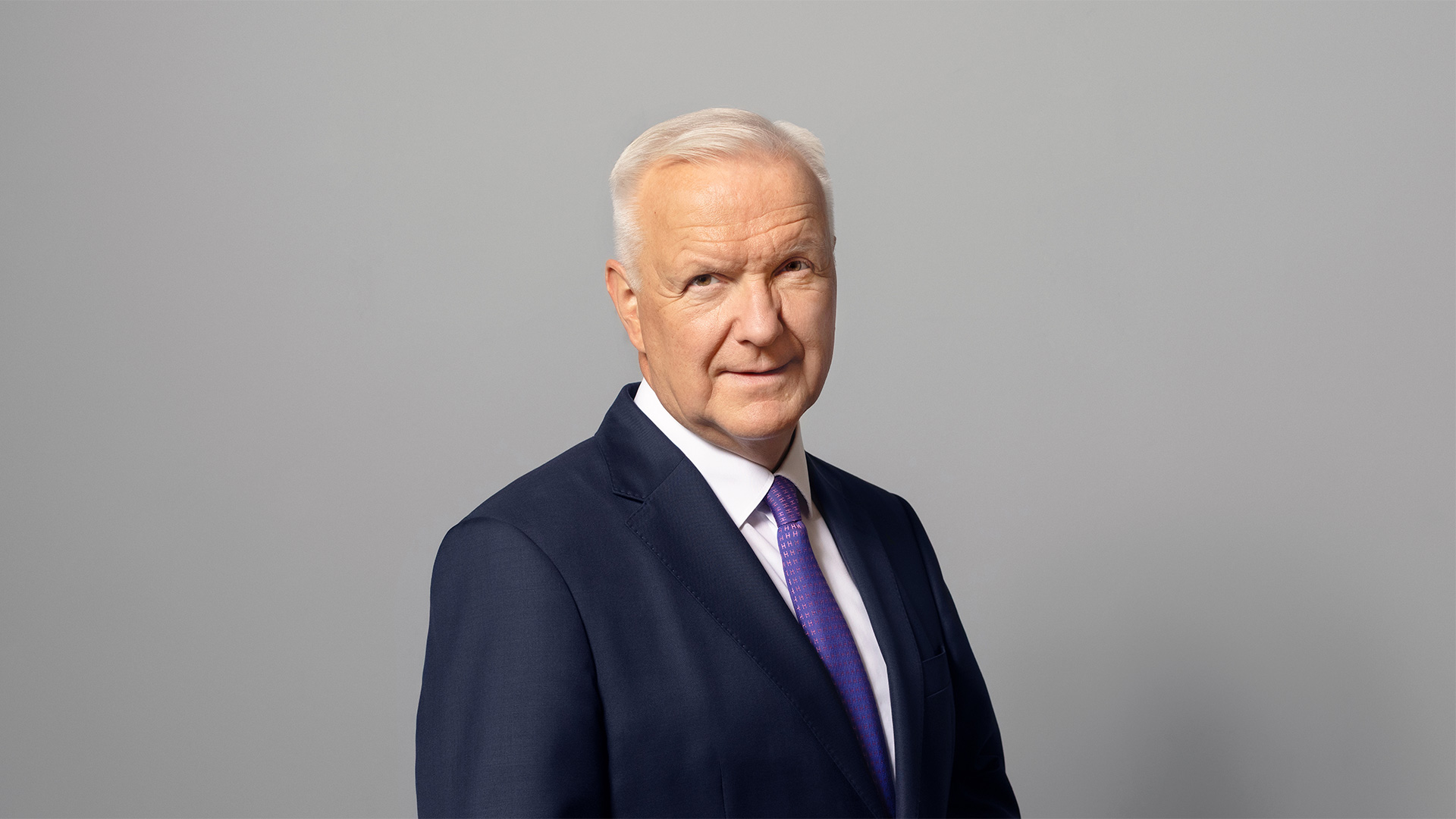
Governor Olli Rehn gave a speech "Economic Security and Strategic Resilience in Finland and in Europe", at Northern Security and Economy Forum in Oulu.
Ladies and Gentlemen, Dear Friends and Colleagues,
It is a great pleasure to be back and join you here in Oulu, the European Capital of Culture 2026, to discuss how Europe can strengthen its economic security and resilience in an age of geopolitical competition.
It is also an excellent opportunity to explore how we can put Finland’s lessons into practice. After all, some say that we Finns are world champions in comprehensive security. Let's not deny that!
Today, geopolitics has ramifications to every dimension of the economy – growth, inflation, financial stability and international trade. Both long-term megatrends, such as AI and climate change, and sudden political developments, such as ongoing wars, are reshaping our operating environment. Power politics has made an unwelcome comeback, with profound consequences for the world economy.
Slide 2. Geopolitics is overshadowing Europe’s economic performance
While all eyes are now on the Middle East, we must not lose sight of Ukraine. Ukraine is fighting not only for its own freedom, but also for the security of Europe and the future of liberal democracy and civil liberties. Ukraine continues to need our support. And Europe must get serious about strengthening its common defence as NATO’s European pillar.
Russia’s illegal and brutal war of aggression is approaching its fifth anniversary. Ukraine and its people bear the heaviest cost, but the economic consequences are still felt around the world. Energy and food prices remain higher than they otherwise would be.
For Europe, the war has exposed the dangers of relying too heavily on a single supplier of energy or other critical commodities. There can be no return to the situation before 2014. Russian oil and gas supplies to the EU will not regain their former role: Europe has learned the risks of dependence, and our green transition has advanced.
Moreover, even after the fighting eventually ends, how many CEOs would recommend new investments in Russia to their boards? Political risks have materialised, forcing companies to write down their Russian investments.
The war in Iran continues to destabilise global energy and commodity markets. Its effects reach Finland too, but our green transition has advanced faster than in many other countries. Our electricity generation is now almost entirely fossil-free – around 96% – with nuclear power and renewables playing a central role. The rapid expansion of wind and solar power in the Oulu region deserves particular mention.
International politics remains in flux. Yet trade continues to connect economies across continents.
Slide 3. World trade is still expanding – despite everything
The rumours about the death of globalisation are exaggerated, but its nature is changing. The defining questions are how Europe positions itself within the emerging global order and how we can help shape it.
Strategic competition increasingly extends to technology, critical minerals, semiconductors, energy systems and financial infrastructure. These developments directly affect investment decisions, trade flows and inflation.
Slide 4. Europe’s free trade agreements: status report 2026
For Europe, the implications are significant. The European Union was built on openness and trade. Cross-border trade and investment, together with international cooperation, have contributed enormously to our prosperity. Our challenge is to preserve these strengths while reducing vulnerabilities that could undermine our security.
Amid uncertainty over US trade policy, Europe has continued to deepen partnerships elsewhere, particularly in Asia and the Global South.
The starting point is solid. The EU has 45 trade agreements in place with 80 partner countries. Free trade agreements will soon cover more than half of our external trade.
This year, the EU has concluded trade negotiations with India and Australia, while the agreement negotiated with Indonesia will soon be signed. The Mercosur interim trade agreement with Latin America has applied provisionally since May.
These partnerships open markets, support innovation and diversify supply chains. They are important to European businesses of all sizes, including Finnish SMEs and large corporations. For a small, export-oriented economy such as Finland, a broad network of reliable trading partners is an essential source of both prosperity and security.
In an age of geoeconomic competition, economic efficiency must increasingly be weighed alongside strategic considerations.
Finland is well placed to succeed in this environment. Our approach to economic security rests on three pillars: security of supply, managing critical dependencies and sound public finances.
First, security of supply. This means keeping the basic functions of the economy running during disruptions. The principle rests on open markets, foreign trade and competitive domestic production, backed by strategic stockpiles and preparedness.
In Northern Finland, security of supply runs through Oulu: its port, railway connections, airport and industry.
Second, managing our critical dependencies. The green energy transition has greatly reduced our dependence on imported energy and fossil fuels. Projects such as the planned hydrogen plants in Oulu show how the transition can also strengthen our domestic production capacity.
Another example is rare earths. If Europe wants to reduce its dependence on China – as we should – someone must invest in mining and refining capacity. This is already happening in Finland, particularly in the North. Here in Oulu, the University of Oulu’s REMhub initiative provides scientific expertise to strengthen Europe’s rare-earth and magnet supply chains.
In my own field of central banking, we work to ensure that Europe's payment systems remain sufficiently autonomous and resilient. The digital euro and instant payments can strengthen Europe's control over its own payment infrastructure.
Economic security should not, however, become a justification for broad protectionism. It means strengthening our capacity to withstand shocks, maintain critical functions and preserve our freedom of action.
Technological capabilities are central to this effort. Artificial intelligence, advanced computing, semiconductors and digital infrastructure increasingly shape both competitiveness and national security. Countries that fail to invest risk falling behind on both fronts.
Again, Oulu offers an encouraging example. The university, Nokia’s legendary radio technology campus and the region’s many high-tech companies provide competitive, trusted solutions for Finland, our European partners and our allies around the world.
Third, sound public finances – and, in many countries, a lower public debt-to-GDP ratio – are essential to economic security.
Slide 5. Reducing public debt ratios remains a priority
Public finances must leave room for a rapid and forceful response to major external shocks. This becomes even more important as European countries move towards defence spending of 3.5% of GDP.
Finland has substantial work ahead to stabilise its public debt ratio and then put it on a downward path.
The Bank of Finland’s latest economic forecast, published in September, projects GDP growth of 1.6% in 2027 and 1.3% in 2028. These figures should be seen against our currently estimated long-term growth potential of around 1% a year, constrained by demographic trends.
But demographics are not destiny. Labour market and pension reforms have already raised employment rates, especially among those of us approaching middle age – by which I mean the over-50s, of course!
Lifelong learning, stronger skills, investment and productivity growth can further improve our prospects.
Slide 6. Europe’s triple test
This brings me to Europe’s triple test: common defence, the energy transition and productivity growth.
First, Europe must take greater responsibility for its own defence as NATO’s European pillar. This requires more investment, better coordination and joint procurement.
Second, Europe must reduce its dependence on imported fossil fuels. Investment in renewables, nuclear power, electricity grids and storage is essential for energy security, competitiveness and our climate goals.
Third, Europe must boost productivity growth. We need stronger investment in human and physical capital, research and innovation – and the ability to turn new technologies into productive businesses.
All three challenges require substantial financing.
Europe certainly has the savings – some €11 trillion in bank deposits. What it lacks is a sufficiently integrated financial market to channel those savings efficiently into productive investment. Completing the Savings and Investments Union would help connect European savings with Europe's strategic needs.
There is also a positive way to view this triple test.
The AI-driven technological transformation, the green transition and the strengthening of our common defence can together generate a sustained wave of investment, innovation and economic renewal in Europe.
We should seize that opportunity.
Let me now conclude. Finland brings important strengths to this effort: technological expertise, clean electricity, strong institutions and advanced digital capabilities. These strengths – economic, technological and human – are very much alive and kicking here in Oulu.
But strengths alone are not enough. We must turn them into investment, innovation and sustained growth – while preserving the democratic values and international cooperation that have made Europe successful.
Europe has the talent, the resources and the financial capacity to meet its triple test. What we need now is the political will to act – together, with greater determination and a stronger sense of urgency.
Economic security and strategic resilience are not just about protecting ourselves against the next crisis. They are about shaping our own future, safeguarding our freedom of action and creating the conditions for sustainable growth.
The time to act is now. Let us turn Europe's strengths into action – and its challenges into opportunities.
Thank you.