
Governor Olli Rehn: Interview in Milano Finanza, 6 December 2025
Governor Rehn's interview on monetary policy and financial stability.
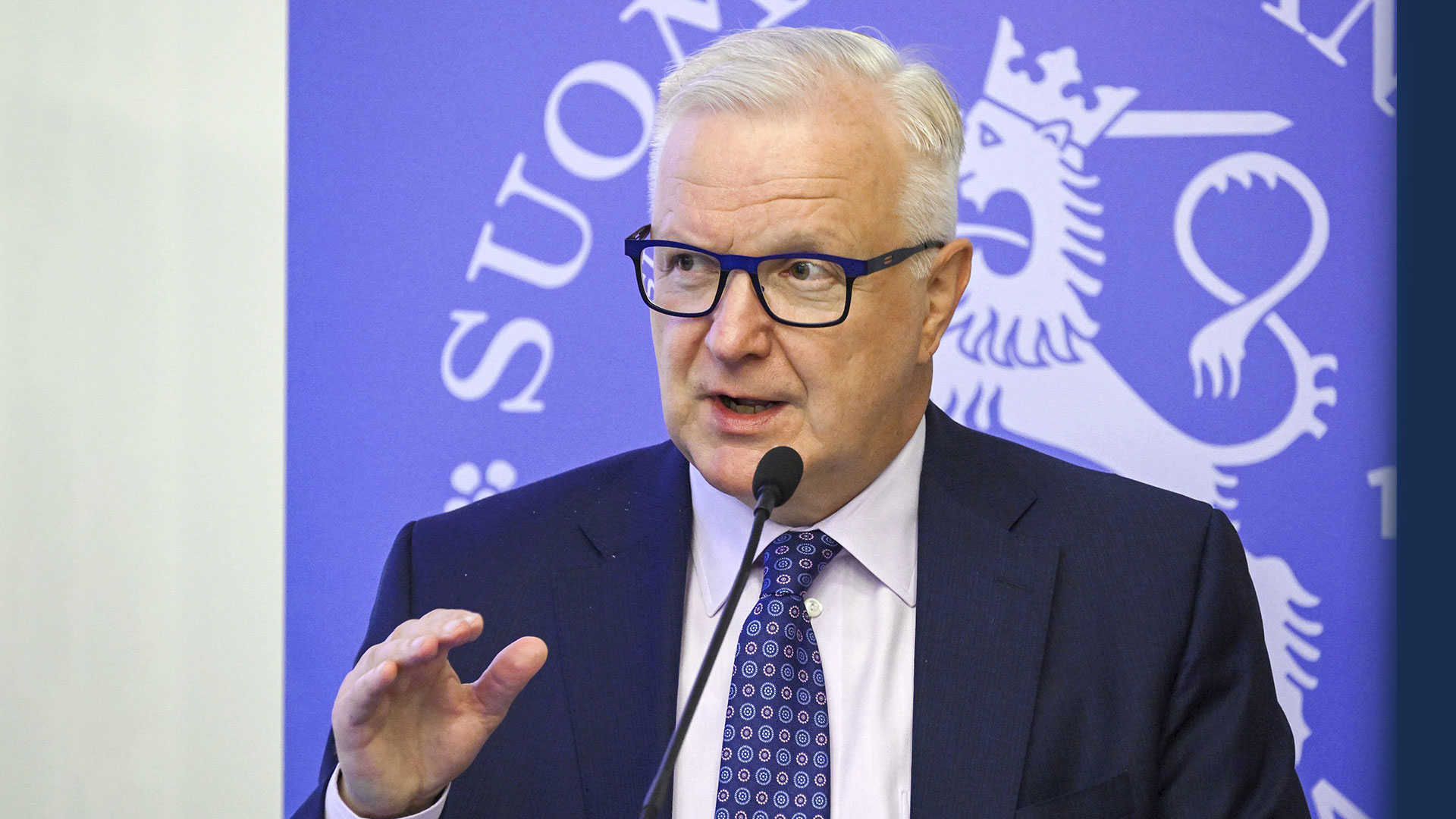
Governor Olli Rehn
Interview in Milano Finanza, by Francesco Ninfole
Published on 6 December 2025
An edited transcript of the interview
Question: Do you see more downside or upside risks to inflation?
Answer: The good news is that inflation has stabilised around the ECB's symmetric 2% target in the medium term, and this is supporting real incomes in Europe. It has been important to bring inflation down from its peak of 10.6% in October 2022 to its current level of 2% without mass unemployment or a significant reduction in economic growth. We need to be aware of both upside and downside risks. The ECB's latest forecast in September indicated inflation in the medium term close to the 2% target, but it also predicted that inflation would remain slightly below 2% over the forecast horizon. Therefore, in my view, the risks are slightly tilted to the downside in the medium term.
Question: What are the main sources of these risks?
Answer: The downside risks are related to relatively low energy prices, the appreciation of the euro and expectations of a slowdown in inflation in services and wages. In addition, growth has been stronger than expected, but has remained rather subdued. On the upside, there is the possibility of geo-economic fragmentation impacting supply chains. A stronger economic rebound should also be considered, for example through a reduction in the savings rate and an increase in consumption and investment.
Question: What is your view on the ETS2 risk to inflation? There has been a postponement of the rules and we may have lower inflation figures for 2027, so undershooting could be greater.
Answer: It is important to make a comprehensive assessment of inflation, and in December we will have forecasts for 2028 for the first time. ETS2 is important, but we must not exaggerate its impact, which is difficult to measure due to political and implementation risks. Furthermore, its impact is likely to be more on the level than on the dynamics of inflation.
Question: How would the ECB react to inflation remaining below target in 2028? Would it take action if there were a small but persistent deviation over several years?
Answer: It is essential to keep three things in mind. First, our decisions must be based on data and projections. Second, our monetary policy strategy emphasises that our target is symmetrical at 2%, which means that we consider deviations above and below the target to be equally undesirable. Third, the target is to be considered in the medium term: this places the emphasis on inflation expectations. As President Lagarde said recently, if deviations from the target remain small and are not long-lasting, then they do not necessarily justify any particular action by the ECB. Whether inflation is sufficiently close to the target or not is something we have to assess at each meeting.
Question: According to the minutes of the last meeting in October, some members of the Governing Council believe that the rate cuts are over, while others say that the ECB should be open to cutting rates again if necessary. What is your opinion?
Answer: It is good to have different opinions on the Governing Council. In October, we reached a unanimous decision, which is important for the credibility of monetary policy. All decisions on interest rates will be taken on a meeting-by-meeting basis.
Question: According to some ECB members, there would be a ‘high bar’ for another cut, meaning that a reduction could only happen in case of events that would change the economy in a very significant way. Is that correct?
Answer: We should not ourselves impose any unnecessary straightjackets on monetary policy, neither bars nor floors. It is better to follow our strategy and practise what we preach. I am sure we will do so.
Question: What trajectory do you expect for monetary policy and the European economy in 2026?
Answer: 2025 was better than expected for inflation and growth, in terms of resilience. However, in terms of economic dynamism, it was still a disappointing year. We should have implemented Mario Draghi's recommendations much more effectively and quickly. For example, the Savings and Investment Union is still not progressing fast enough, and I think a deadline should be set for its completion by January 2028. There is a lot of work to be done on the single market, on the green transition, which is a strategic imperative for Europe, on simplification and on the competitiveness of European industry. Looking ahead to 2026, the growth projection remains relatively modest. To make the European economy more dynamic, we would need to take the necessary decisions on common defence, competitiveness, digital sovereignty and decarbonisation. Political will is crucial in these areas.
Question: So will the ECB play a less important role in 2026 and be able to proceed on autopilot?
Answer: That may have been the thinking somewhere at the end of 2019: stability. Then came COVID-19, the war in Ukraine and the energy crisis. For the moment, inflation is around target and we have a fairly solid situation in terms of financial stability. It is true that much more can now be done to promote growth, and in this regard, the responsibility lies much more with EU governments. In general, however, I am of the activist school of monetary policy. We should never proceed on autopilot. On the contrary, we must always remain agile and active, if the data and projections so require, in order to maintain the inflation target.
Question: President Lagarde said in this regard that the ECB is in a ‘good, but not fixed’ position on interest rates.
Answer: I agree with the President and I place particular emphasis on the words ‘not fixed’. We must always look at medium-term inflation expectations, which by definition are not fixed.
Question: In 2026, the ECB should clarify how the operational framework works. How do you see this work progressing? Will there first be long-term refinancing operations and then the structural bond portfolio?
Answer: The detailed definition of these structural operations is one of the challenges ahead. These instruments were intentionally left open in 2024 and will be introduced at a later stage, once the Eurosystem's balance sheet starts to grow again. They will be calibrated to avoid interfering with the monetary policy stance. There is still some way to go in reducing the balance sheet and liquidity before these operations need to be launched. I agree with ECB board member Isabel Schnabel on this. However, it is important to have started analysing how this will work so that we are ready.
Question: Do you expect a decision in the second half of 2026?
Answer: I think it is very likely, but we should not have a definitive deadline in case there are reasons to reflect a little longer.
Question: Would there be consequences for the ECB if the Fed lost its independence?
Answer: Political pressure on central banks significantly raises inflation expectations, while independence is associated with lower and more stable inflation. Overall, the consequences for the euro area of a potential reduction in the Fed's independence would certainly be negative, as the implications of the Fed's monetary policy are also transmitted to the euro area economies. Furthermore, developments in US institutions tend to have ramifications to the political atmosphere in Europe. Thankfully, however, the ECB's independence is enshrined in the EU Treaty and has not been questioned by political leaders at national level.
Question: The Finnish government supports your nomination for the ECB vice-presidency at the end of Luis De Guindos' term in May. What prompted you to run and what would be your contribution in that role?
Answer: I have received encouragement from different parts of Europe. Europe is a rational passion for me. I have worked for most of my working life for European integration and the euro, and I could also contribute as Vice-President. I have quite extensive and long experience in monetary policy and policy-making in general in Europe. I would compare the role of Vice-President to that of a midfielder who works to defend and attack and to facilitate team play. Every team needs a Casemiro or a Tardelli.
Question: The ECB has been called upon to participate in the plan for Ukraine, but Lagarde has pointed out that the central bank cannot violate the Treaty. What should the EU do to finance Ukraine and what can the ECB do in this regard?
Answer: It is essential, even existential, that a solution be found soon on the reparations loan for Ukraine based on Russia's frozen assets. Regarding the FT's speculation about a proposal involving the ECB, it is clear that such a proposal would violate the EU Treaty, which prohibits monetary financing. There is now another proposal from the European Commission based on Article 122. This is a very reasonable way forward. I remember when we used this article in 2010 to create the EFSF, the precursor to the ESM. Since this is an existential crisis, we should rely on this emergency article of the Treaty. Every European and every leader in the EU Member States should be in favour of using frozen Russian assets to support Ukraine.
Question: What do you think about the discussion on a safe asset for the euro area?
Answer: We should have reached the Hamiltonian moment in Europe much earlier. Especially in the current context, where we need to invest heavily in common defence, we need not only national but also European solutions. Safe assets would also be a basis for creating a deep and liquid capital market in Europe.
Question: You are also Vice-Chair of the ESRB. What are the main risks to financial stability? Do you see any dangers linked to market bubbles?
Answer: The good news is that the European financial system is stable and the banks are sound. As for the markets, sentiment has remained surprisingly optimistic despite the high level of uncertainty. This has contributed to fears about possible asset price overvaluation. Valuations are quite high relative to economic developments and corporate earnings.
Question: Are you concerned about the widespread use of crypto assets and stablecoins?
Answer: The total size of crypto is still small but growing, along with its interconnections with the financial sector. Therefore, the market should be closely monitored. One risk associated with stablecoins is the possible large-scale sale of reserve assets if many users want to redeem a large amount of stablecoins. This could also cause contagion for financial stability. In addition, the reserve assets that back a stablecoin usually consist of US government bonds, but sometimes also gold or bitcoin. The latter do not maintain a stable value against the dollar and are a risk to the one-to-one parity guarantee. In general, rules on stablecoins and crypto should be harmonised across jurisdictions to avoid arbitrage. In Europe, we need to update the MiCAR regulation to ensure a level playing field and avoid the risks of multiple issuances. In any case, I find it difficult to understand investments in stablecoins, given that they do not yield returns. On the other hand, I fully understand the business case for stablecoin issuers, as they collect the seigniorage in terms of interest – if they have customers.