
Speech by Olli Rehn: Geopolitical turmoil and the Eurozone
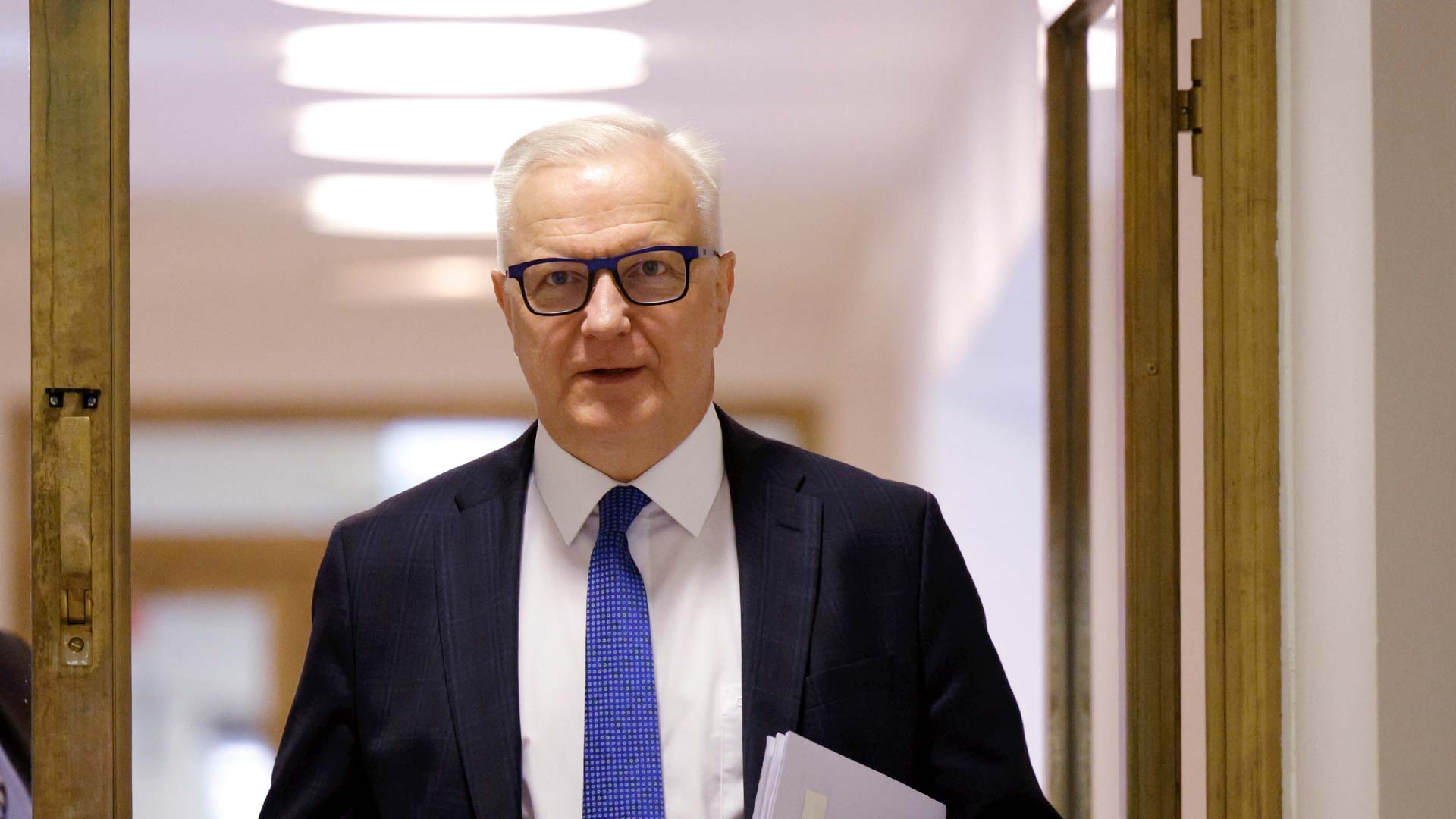
Governor Olli Rehn gave a speech on geopolitical turmoil and the eurozone at the Washington Economic Festival: Global Macro Sessions, organized by Reinventing Bretton Woods Committee, in Washington DC on 16 April 2026.
Chair, Ladies and Gentlemen, Dear Friends,
Thank you for the invitation to give a talk and exchange views with this distinguished audience today.
Let me provide you with a European perspective and divide my introductory remarks into three parts. I’ll first look at the ramifications of the Middle East conflict and the energy crisis for the euro area. Second, I’ll discuss making monetary policy based on the ECB’s strategy. Third, I‘ll conclude with Europe’s longer-term structural challenges.
Slide 2. Geopolitics is overshadowing the world economy
Today, geopolitics affects every dimension of the economy — growth, inflation, financial stability, international cooperation. On top of long-term megatrends – artificial intelligence and climate change – major political turns and the ongoing wars are reshaping our operating environment.
The conflict in the Middle East is not only a geopolitical issue and human tragedy — it is an acute blow to the global economy. Both Asia and Europe are on the receiving end of the collateral damage caused by it.
And while all eyes look now to the Middle East, we should not lose sight of Ukraine. Ukraine is fighting for freedom and democracy, and for European security – and continues to need our support.
Slide 3. the war in the Middle East is slowing euro area GDP growth and pushing up inflation – the ECB’s scenarios
For Europe, the war in Iran is a negative terms-of-trade shock. The short-term impact of the shock is clear. Inflation will increase this year, while growth will weaken. But the medium-term effects are still uncertain.
And that matters to policymaking in the current context. The ECB’s monetary policy strategy of 2025 (and 2021!) particularly underlines our medium-term orientation. Our price stability objective is defined as a symmetric inflation target of 2% over the medium term.
Hence, what matters most is not the immediate increase in prices, but whether the shock has persistent effects on inflation and the general price level. Right now, the outlook is foggy. That is why we are putting so much weight on incoming data and continuous analysis with scenarios.
Slide 4. Crises are not twin sisters
The euro area also has decades of experience in dealing with different kinds of shocks and with different drivers of inflation. And although we have seen energy shocks before, history does not repeat itself.
Every shock is different. Crises are not twin sisters.
Geopolitical shocks are complex, multi-channel events. They do not only raise oil prices. They also increase uncertainty, tighten financial conditions and disrupt international trade, which dampens growth.
Let me refer to lessons of two critical episodes, those of 2022 and 2011.
We still have fresh in mind the 2022 energy shock following Russia’s invasion of Ukraine. Inflation reached its peak above 10% in October. From the summer 2022 the ECB tightened monetary policy and stabilised inflation back to 2% without a recession or mass unemployment.
Not every oil price spike translates into the same inflation outcome, however. In between 2011 and 2014, oil prices rose above 100 dollars per barrel due to strong global demand and supply disruptions related to the Arab Spring. Demand was weak due to the euro area debt crisis, which limited the pass-through of energy prices to underlying inflation.
Do I need to remind us that the ECB’s two subsequent rate hikes of spring 2011 were reversed in November and December 2011?
The reason for the relatively limited pass-through at the time was not unique as such: the inflationary impact of an energy shock does not depend on the energy price move alone. It is also shaped by the broader macroeconomic environment: prevailing demand and supply conditions, existing price pressures, bottlenecks, expectations – and the extent to which the shock spreads beyond energy into the rest of the economy.
Thus, the effect on inflation depends on the state of the economy. That’s why we closely monitor second-round effects and inflation expectations.
Slide 5. The ECB’s key interest rate steady at 2.0 percent – short-term market rates spiked in recent weeks
In these times of pervasive uncertainty, monetary policy must be conducted with a steady hand, depending above all on the duration of the conflict and the damage it inflicts. Monetary policy options can, as the textbook would have it, be distilled into two main alternatives:
The first is that the damage on energy markets remains limited in time and scale. In that case, it could be possible though by no means certain that the rise in energy prices could be “looked through” in monetary policy.
The second is that the ceasefire fails to hold, the Strait of Hormuz remains closed, and the conflict becomes protracted. If this were to generate second-round effects on prices and wages and if inflation expectations were to become unanchored, monetary policy would need to be tightened in line with our strategy – decisively and forcefully.
At present, there is no clarity about how the situation will evolve. In any case, the ECB Governing Council is committed to keep inflation stabilised sustainably around our 2 percent target over the medium term. Calm judgment will prevail over haste, and no decisions are predetermined.
Slide 6. Energy costs burden euro area industry
We must also recognise a structural vulnerability in Europe: our continued reliance on imported fossil fuels. Europe has improved its resilience in recent years. But the energy transition is still ongoing, and energy costs for European producers have remained relatively high since 2022.
The Iran war underlines that the green energy transition is essential for Europe’s strategic autonomy and competitiveness — and for the climate. Slowing the green transition now would be a serious mistake.
Slide 7. Europe’s strategic triple test
Let me conclude. Today, Europe faces what I call a strategic triple test.
The first – and existential – test is security. Russia’s war in Ukraine and changes in US policy have made one thing clear: Europe must take greater responsibility for its own defence. Common defence will also require common financing — and pave the way for European safe assets that can strengthen our capital markets and support investment.
The second test is energy and climate. The green transition is not a luxury. It is Europe’s only credible long-term energy strategy. Energy security, competitiveness and climate policy now point in the same direction: clean energy, electrification, and energy efficiency.
The third test is growth and investment. Defence and green transition will require massive investment. If done right, these investments can also raise productivity and innovation. This is why completing the European Savings and Investment Union is so important. But above all, Europe must invest in its greatest strength: its people. Human capital — education, research, skills and innovation — is the true foundation of long-term prosperity.
With the right policies and a long-term perspective, Europe can turn today’s challenges into tomorrow’s opportunities. Monetary policy will do its part. At the ECB Governing Council, we will act with a steady hand, keep inflation expectations anchored and maintain price stability.
Thank you! I look forward to our discussion.