
Systemic Risk in an Age of Uncertainty
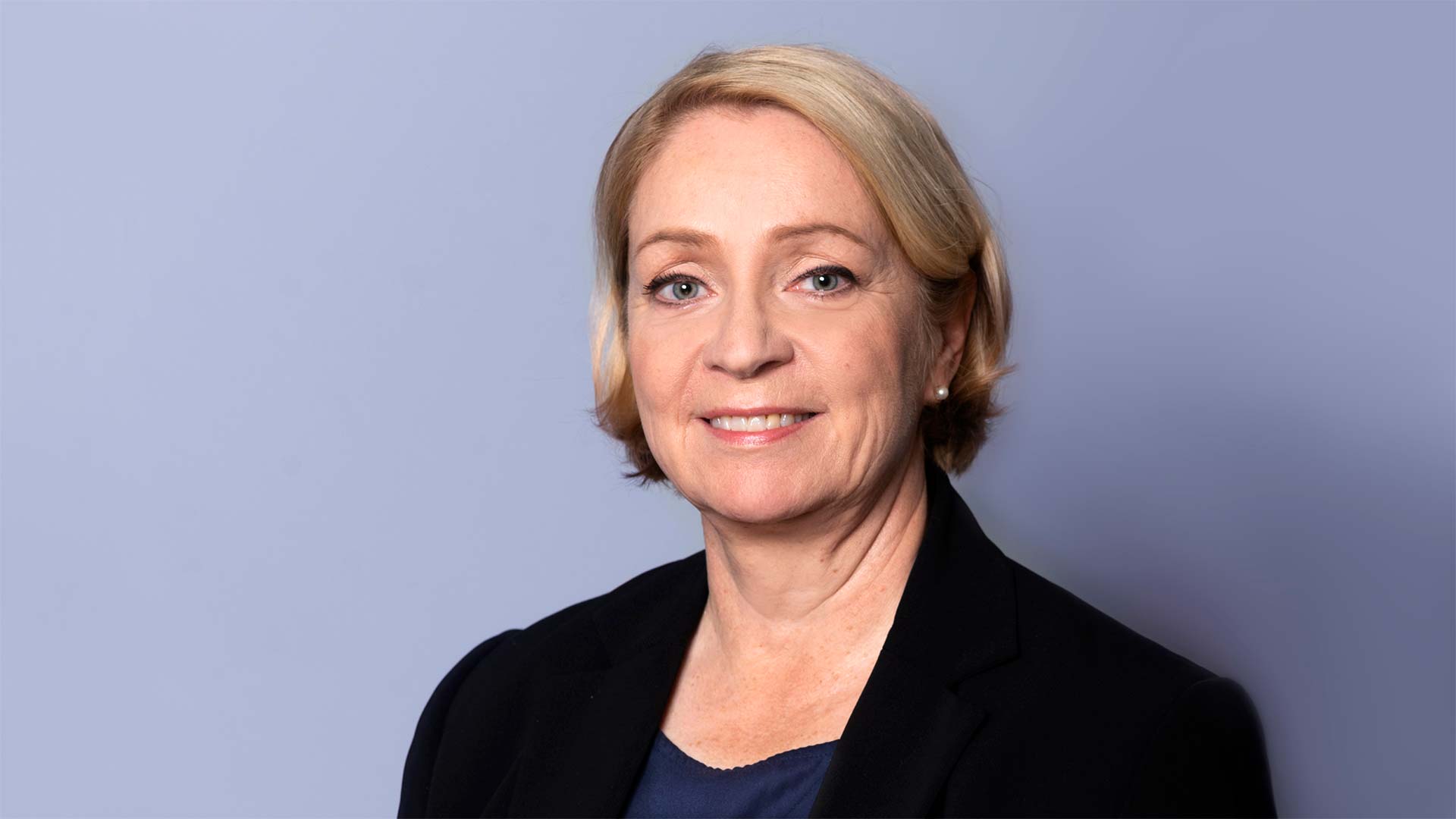
In her keynote address at the 11th Bank of Finland and European Systemic Risk Board Joint Conference on AI and Systemic Risk Analytics, Deputy Governor Marja Nykänen highlighted that financial stability is necessary for sustainable economic growth and prosperity.
Good morning everyone, and welcome to Helsinki!
It is a real pleasure to see so many of you here and online. I am especially pleased that the agenda brings together different perspectives on systemic risk at a time when understanding risk has become both more urgent and more demanding.
We are living through a period in which the financial environment has become markedly more demanding. Risks are more numerous, more interconnected and harder to assess than before. This calls for adaptation and forward thinking.
At the same time, the information environment is evolving. Artificial intelligence (AI) is a central theme of our conference, and rightly so. AI is changing how information is produced, disseminated and used. Social media plays a role in this, too. It can amplify tensions − intentionally or not − and disinformation can challenge fact-based public debate. In such an environment, uncertainty can escalate faster, trust can erode more easily and risk assessments can become more difficult precisely when clarity is most needed.
There is also a notable shift under way in the policy climate surrounding financial stability regulation. After the 2008−2009 global financial crisis, regulation was strengthened to make the financial system safer and more resilient. That framework was built for a reason: to reduce the likelihood and severity of systemic crises. Currently, the mood in many forums has started to move towards modernising and simplifying regulation.
I am, of course, very pleased to say that so far the financial sector has successfully managed to steer through these rocky waters. However, we should be careful not to confuse resilience with the absence of risks.
This is why high-quality and well-grounded research on systemic risk is now more important than ever. We need better evidence on how vulnerabilities emerge, how shocks are propagated, and how policies can reduce systemic risk without creating unintended consequences. In a world of greater uncertainty, research is not a luxury. It is part of the essential infrastructure of sound policymaking.
In my remarks today, I would like to highlight three points related to 1) risk analysis, 2) risk management and 3) resilience building, that systemic risk research should pay particular attention to in the world in which we are now living.
I will first look at the changing risk landscape and how it affects risk analysis.
Risk management has never been easy or straightforward. To add to this, we have come to realise over the years of the present decade that financial stability can also be challenged by risks that were previously not included even in the most severe scenarios. Let’s take a closer look at some of these.
Geopolitical and macroeconomic uncertainties have intensified markedly. Russia’s war of aggression in Ukraine is still ongoing, and another war is taking place in the Middle East, with the involvement of the United States. Transatlantic relationships are under strain. Evidence of this is plain to see, for example in the diverging views among NATO members on the alliance’s fundamental purpose.
Such shocks can, of course, have a direct impact on economic growth and the financial markets, but they may also be felt through significant second-round effects. For instance, the Middle East conflict has led to oil prices surging, and now inflation is looming. This poses a threat to economic growth which in parts of the euro area is only just beginning to recover. The markets tend to respond to sudden shifts in the political arena with high volatility.
In addition, cyberattacks, hybrid threats and risks concerning the misuse of artificial intelligence (AI) have become part of everyday reality. This is partly driven by geopolitical events, and partly by the accelerating pace of technological progress. While technology can certainly bring tremendous benefits and enable new possibilities, there are always malicious actors willing to exploit new innovations for harmful purposes.
At the same time, there are new non-bank market participants who have entered the scene and increased their share of financial transactions. This development is undoubtedly beneficial in many ways − for borrowers, for example, who are able to better compare service providers and their financial products. Nevertheless, the growing complexity of global financial networks and potential spillover effects across sectors can create systemic risks which were not common in our so-called ‘old world’.
ESG and climate change risks should not be overlooked either, even though these are not currently gaining the most media coverage. Recent events in the Middle East and the Strait of Hormuz only underscore the need to continue moving towards clean energy sources. In the meantime, we also need to continue preparing for physical and transition risks that may arise from climate change.
We have been witnessing these developments for some years now, and together they have fundamentally reshaped the risk environment. Furthermore, they seem to be factors with a particular potential to generate systemic risks and broader financial stability imbalances.
So, what does all this mean for systemic risk research? It means that our data needs are changing. If systemic risk increasingly arises from complex, cross-sectoral and cross-border interdependencies, we cannot rely on traditional financial market data alone. We need to combine financial data with new types of information: for example, health-related data when assessing the transmission channels of pandemics; data on firms’ energy dependencies when analysing vulnerability to supply shocks or transition risks; and data that reveals interconnections between institutions, infrastructures and markets across countries. In other words, understanding modern systemic risk requires richer, more integrated and more multidimensional data than before.
It also means that our analytical approaches must evolve. We need to be able to assess developments for which there may be little or no historical precedent, or whose effects are so complex that precise identification is inherently difficult. In policymaking, this has already meant that alongside models based on historical regularities or established theory, we increasingly rely on scenario analysis as an additional tool for decision-making – for example in macroprudential policy. Scenario-based approaches help us think systematically about vulnerabilities, transmission channels and possible outcomes, even when probabilities are difficult to estimate with confidence.
This also challenges us to develop new analytical tools and methods – and that is precisely why conferences like this are so important. When the risk landscape is changing rapidly, and when the questions we face cannot always be answered with yesterday’s data or yesterday’s models, it is essential to have forums where the most advanced analytical techniques can be presented, questioned and debated.
Next, as my second key point, I would like to briefly share some observations on what these unpredictable risks mean for risk management.
From the financial market perspective, the developments we have talked about represent external shocks, for which few, if any, of us could reasonably prepare in advance. While we are now well aware of these events and their consequences, we are still navigating unfamiliar territory. Our traditional approaches to measuring and managing these complex risks are no longer sufficient on their own.
The risk environment of financial institutions has changed fundamentally, and we are now living in a world of unknowns, where possible scenarios are more diverse, and where the threats to financial stability are no longer limited to traditional credit, market and liquidity risks. In such an environment, managing risk is not enough. Financial institutions must also be able to manage uncertainty.
This distinction is also important from the perspective of academic research. From the literature on ambiguity aversion, we know that economic agents behave differently when they face uncertainty rather than measurable risk. When probabilities can be estimated, market participants can price and manage risk in familiar ways.
But when probabilities are unclear, behaviour changes. Investors may place disproportionate weight on the worst possible scenario, and borrowers may postpone decisions altogether. In other words, when people cannot form sufficiently confident views about future outcomes, they become more cautious, and markets can become less active and less liquid.
This helps us understand why uncertainty can matter so much for financial stability. The literature suggests that sudden losses of market liquidity may reflect not only rising risk, but rising ambiguity. When market participants no longer know how to assess outcomes with confidence, they may withdraw, wait or demand a much higher premium for acting. This is highly relevant in the world we live in today.
A concrete example can be found in the Finnish housing market. Housing market activity in Finland has remained subdued for a prolonged period that began with the sharp rise in interest rates in 2022, and transaction volumes have stayed low. There are, of course, various reasons for this. But uncertainty about the future is surely one factor weighing on the willingness of households and investors to engage in residential property transactions.
If people are unsure not only about the level of interest rates, but also about future housing prices, the economic outlook, employment prospects or the broader policy environment, they may prefer to wait rather than act. This is a good example of how uncertainty can shape market dynamics in ways that are not fully captured by standard risk measures.
Financial institutions therefore need to find a way of managing uncertainty in addition to managing risks. Research can help greatly in this task, as it can improve our understanding of how uncertainty affects market behaviour, liquidity, pricing and the transmission of shocks. This is particularly important when the next disturbance may not resemble the previous one.
As my third point, I would like to turn to the question of resilience − and how to preserve it in a world where both risks and policy choices are becoming more contested.
The functioning of the financial system ultimately rests on trust. Especially at difficult times, trust becomes the cornerstone of the entire financial system. The trust of the general public and investors helps prevent the risk of bank runs, supports the continued flow of credit into the real economy and limits the spillover of crises across sectors and countries. Without stability, trust in financial market participants can erode very quickly.
It is important to recognise that trust is a fundamentally non-linear phenomenon. It can be lost much faster than it can be built. In an era of digitalisation, instant communication and AI, shifts in sentiment can spread more quickly than ever. Once trust weakens, market functioning can deteriorate abruptly.
Rebuilding trust, by contrast, is slow and difficult. Building resilience also takes time. In Europe, and more broadly in the global financial system, we have spent many years building resilience after the global financial crisis. Today, we have a much stronger and more resilient framework than before. That achievement should not be underestimated.
Just as systemic risks are multidimensional, a protective safety net must also be based on multiple lines of defence. This requires sound regulation that ensures there are adequate capital and liquidity buffers against shocks. It requires effective supervision that can identify risk concentrations, governance weaknesses and misconduct early enough. And it requires credible recovery and resolution arrangements that can contain problems when they nevertheless arise and prevent them from spreading through the system.
As was frequently stated during the COVID pandemic, “banks are part of the solution”. The same remains true today, as we face a range of external, hard-to-predict threats that pose challenges to the functioning of the financial system. Strong banking sector resilience and capability to remain fully operational in all circumstances are particularly important in a challenging and uncertain environment. They are the key for maintaining confidence in the financial system as a whole. By investing in resilience, banks can help to safeguard financial stability.
The importance of banks’ capital and liquidity buffers cannot be overstated. Adequate capital and liquidity buffers allow banks to be prepared – regardless of the source of the unexpected shock. Whether facing specific measurable risks or non-traditional unmeasurable risks, or perhaps even several simultaneous shocks that are interacting with each other, the presence of strong buffers will provide the foundation for banks’ resilience and enable them to absorb potential losses.
Furthermore, operational preparedness has now become an even more critical topic. Banks have always prepared for possible IT problems and disruptions in their services by designing contingency plans, testing the systems, and so on. However, developments such as cyber and AI threats have elevated the need for such preparedness to an entirely new level.
Turning now to the role of the authorities. Financial regulation has had a tendency to ebb and flow like a pendulum. After crises, regulation is tightened. Then, as memories of the past crises fade, pressure to simplify, ease and roll back requirements begin to grow. Various simplification and modernisation efforts seem to be widespread across jurisdictions and authorities, covering both regulation and supervision. We should acknowledge the continuous need for reviewing regulatory and supervisory policies and supervisory practices to ensure that they are up to date and effective. In this work we should avoid race to the bottom in order not to compromise financial stability.
Households need access to credit, businesses need funding for investment, and the economy as a whole needs a financial system that can channel savings into productive uses in a stable and predictable way. This is especially important in Europe today. Our growth is weak, investment needs are large, and there is a legitimate debate about how the financial system could better support innovation, productivity and long-term growth. We should certainly ask whether there are bottlenecks in European finance that need to be removed, and whether the structure of our financial system serves the needs of the real economy as well as it should.
Bringing my remarks shortly to a close, I’d like at this point to emphasise that financial stability is not something that can be taken for granted, but instead should be understood more broadly. It is the result of long-term institutional work, careful regulation, effective supervision and credible crisis management. Financial stability should not be regarded as an obstacle, an alternative or a competing objective to growth. Financial stability is necessary for sustainable economic growth and prosperity. Stable financial markets provide the necessary systems for making payments and safeguarding deposits, among other things. Therefore, financial stability deserves to be protected at all times.
In a volatile global landscape, it is all the more important not to make hasty changes in the regulatory framework without a solid evidence base. Research can play a crucial role here. It can help us better understand the effects of regulation, the value of resilience, and the trade-offs involved in different policy choices. And this is precisely the right time to strengthen that evidence base.
Thank you for your kind attention!